
What Jefferson County Deed Records Put on the Chain
A sale deed is only the start. The Clerk also records security deeds, releases, corrective filings, and easements, each of which can affect land without moving full ownership. Instrument type tells you what an entry actually did to the parcel, so read the image and its legal description before placing it in the chain.
| Deed Type | What It Does | Common Use |
|---|---|---|
| Warranty or limited warranty deed | Conveys the stated interest with written promises that vary by deed | Locate an ordinary purchase transfer |
| Quitclaim deed | Conveys whatever interest the grantor may hold | Resolve family, boundary, or corrective transfers |
| Executor or administrator deed | Transfers estate property through a fiduciary | Connect probate authority to a conveyance |
| Deed under power, sheriff deed, or tax deed | Records a transfer through a power or public process | Trace foreclosure, levy, or tax-sale events |
| Security deed, assignment, or cancellation | Creates, transfers, or releases a secured interest | Check financing and releases |
A lien can burden land that a deed just conveyed. So can a security deed. Pull the releases and cancellations too, because an unreleased index hit gives only half the story.
The Jefferson County Clerk Is the Recording Office
Clerk Anne L. Durden's office holds the county's deeds, plats, liens, UCC filings, PT-61 records, and related instruments. The counter sits at 202 East Broad Street, Louisville, Georgia 30434, with mail to P.O. Box 151. The phone is 478-625-7922. Public research hours run Monday through Friday, 8:30 a.m. to 5 p.m.
Some lookups still need the courthouse. Older books and odd spellings lead there too. A mail request should list both parties when known, deed type, approximate date, book and page, parcel, and a legal-description clue. Routine copy questions start at the recording desk.
Note: Confirm current hours and payment terms before you travel.
Walk Jefferson County's Grantor-Grantee Index Backward
The GSCCCA Real Estate Index is the online route the Clerk links. It runs Name, Book/Page, Property, and premium instrument-type searches, though Jefferson County's earliest online year is not published.
- Search the current roll owner as grantee, narrowed to Jefferson County and a likely date span.
- Compare the land description, grantor, grantee, deed type, instrument date, recording date, and book/page.
- Search that deed's grantor as a grantee to locate the prior acquisition.
- Repeat with initials, suffixes, entities, estates, and spouse-name variants, then move to deed books when the online chain ends.
- Grantor
- The party conveying the stated interest.
- Grantee
- The party receiving that interest.
- Chain of title
- The linked series of transfers affecting the same land.
- Book/page or instrument number
- The recorded reference used to retrieve a document.
Georgia Deed Search Modes Keep Different Clues Separate
GSCCCA offers several routes rather than one universal form. Name Search follows parties; Book/Page Search retrieves a citation. Property Search uses county, subdivision, unit, block, and lot. Premium Instrument Type Search can narrow a broad result set, while field requirements and result caps vary by route, so assume no controls beyond each screen.
Record what each hit gives you. Save party names, instrument type and date, recording date, volume and page, document number, consideration, legal description, parcel reference, subdivision, return-to address, PT-61 link, and image availability. The official deed index is where every one of these modes begins.
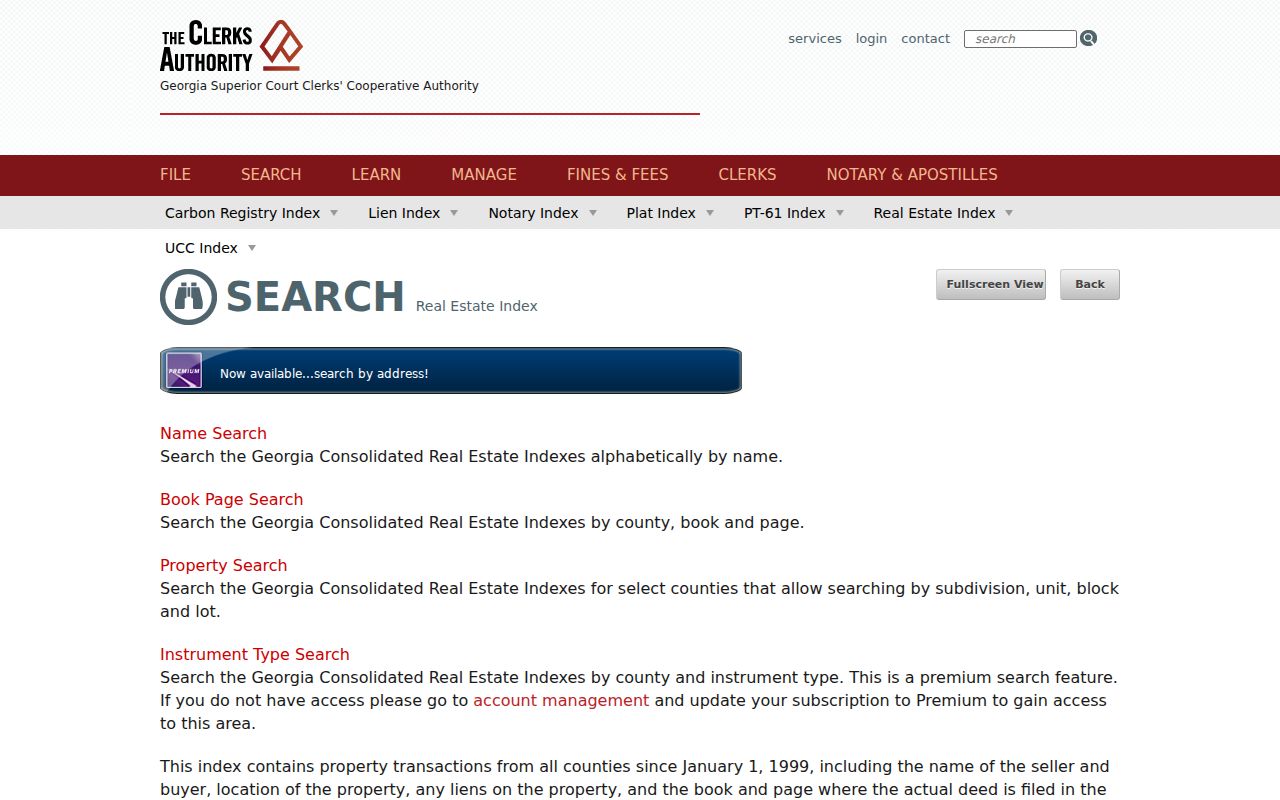
Keep each route's clues separate: names, citations, and subdivision details.
An 1861 Loss Complicates Early Jefferson County Deeds
Georgia Archives material lists surviving county records from about 1800 through 1911. Local history reports a significant loss in 1861. That gap can break a clean chain. A missing deed does not mean no transfer occurred. It must never be replaced with a guessed owner.
Work the Clerk's books and indexes first. Then try the Georgia Archives Virtual Vault, microfilm, FamilySearch, probate papers, tax digests, mortgages, plats, and later corrective deeds. Boundary changes may place an older link in a neighboring county. Louisville's digitized News and Farmer covers 1875 through 1967. It supplies sheriff-sale, estate, road, and land-description leads.
Mark the historic gap. Label each substitute clue as tax, probate, plat, newspaper, or inference instead of presenting it as a recorded deed.
Jefferson Plats and Liens Test a Deed Match
A grantor may convey more than one tract. Lot, block, subdivision, acreage, roads, creeks, and adjoining owners decide which one the deed touched. The GSCCCA Plat Index takes name and book/page searches. A plat explains a split or survey reference; Jefferson County's online image coverage has no published start date.
Pair every lien hit with its release or cancellation, since PT-61 filings add transfer-tax leads and UCC records cover collateral without ever replacing real-property deeds.
The official plat index opens directly.
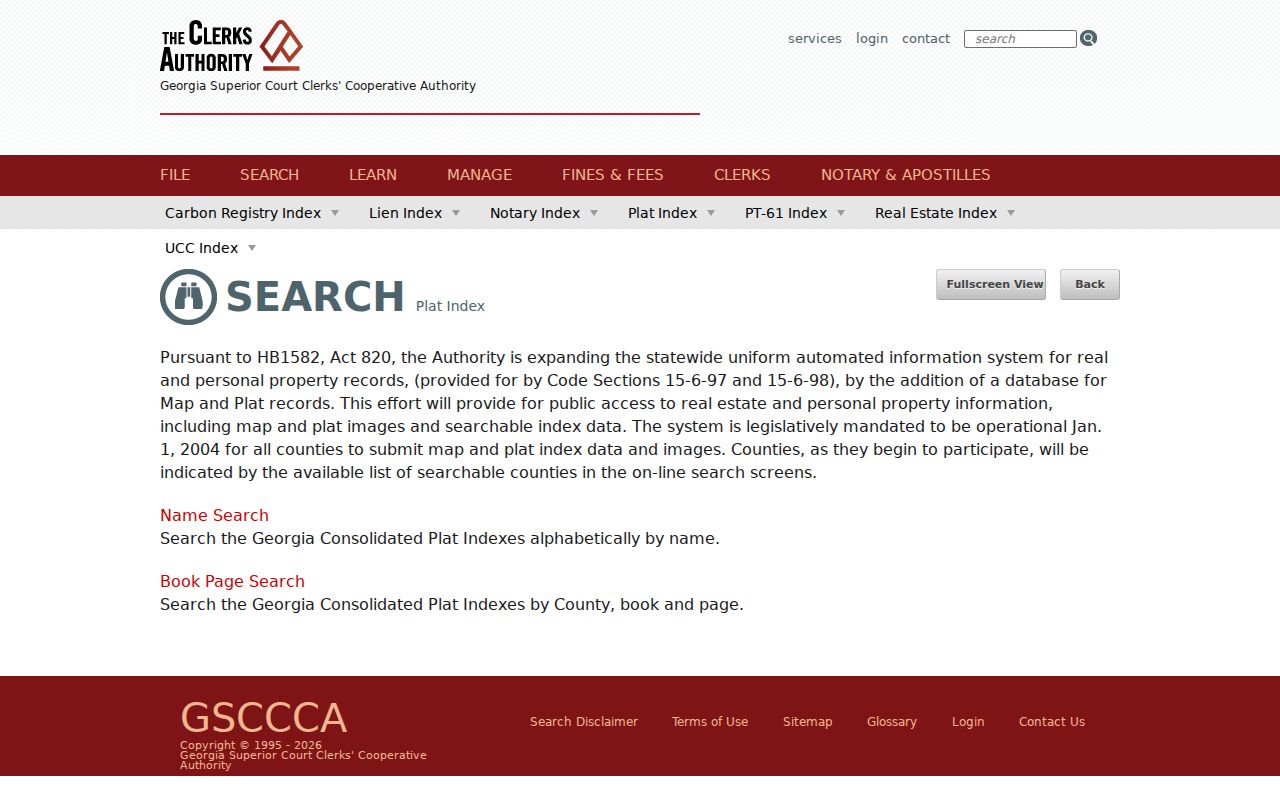
Its name and book/page paths set plats apart from deeds and liens.
Order a Jefferson County Deed Copy or Certification
Ordinary copies from the Clerk run $1 per page. Certified copies cost $2.50 for the first page plus 50 cents for each later page. Posted payment is Mastercard or Visa debit or credit, or money order; no cash. Confirm the total before ordering.
The Clerk's eCertification instructions point to eCert. Create a free account, pick the county and document, submit the request, authorize payment after clerk processing, and receive the PDF online or by email. The flyer states no exact total. GSCCCA images may require account access, so the courthouse and mail still matter.
Recorded, not guaranteed. A Jefferson County index hit does not prove clear title, settle every interest, or replace a qualified title opinion.
FANS Watches Later Jefferson County Filing Activity
GSCCCA FANS is a free, voluntary filing alert built on clerk-transmitted index data. Coverage begins at enrollment and is not guaranteed complete, current, or accurate. Georgia's HB 1292 identity-validation changes took effect January 1, 2025. That makes deed alerts a useful extra fraud-prevention step.
Verify any unexpected alert with the Clerk. Add a qualified title professional for real concern. FANS cannot replace periodic deed-index review or a title search.
Enroll through GSCCCA FANS itself.
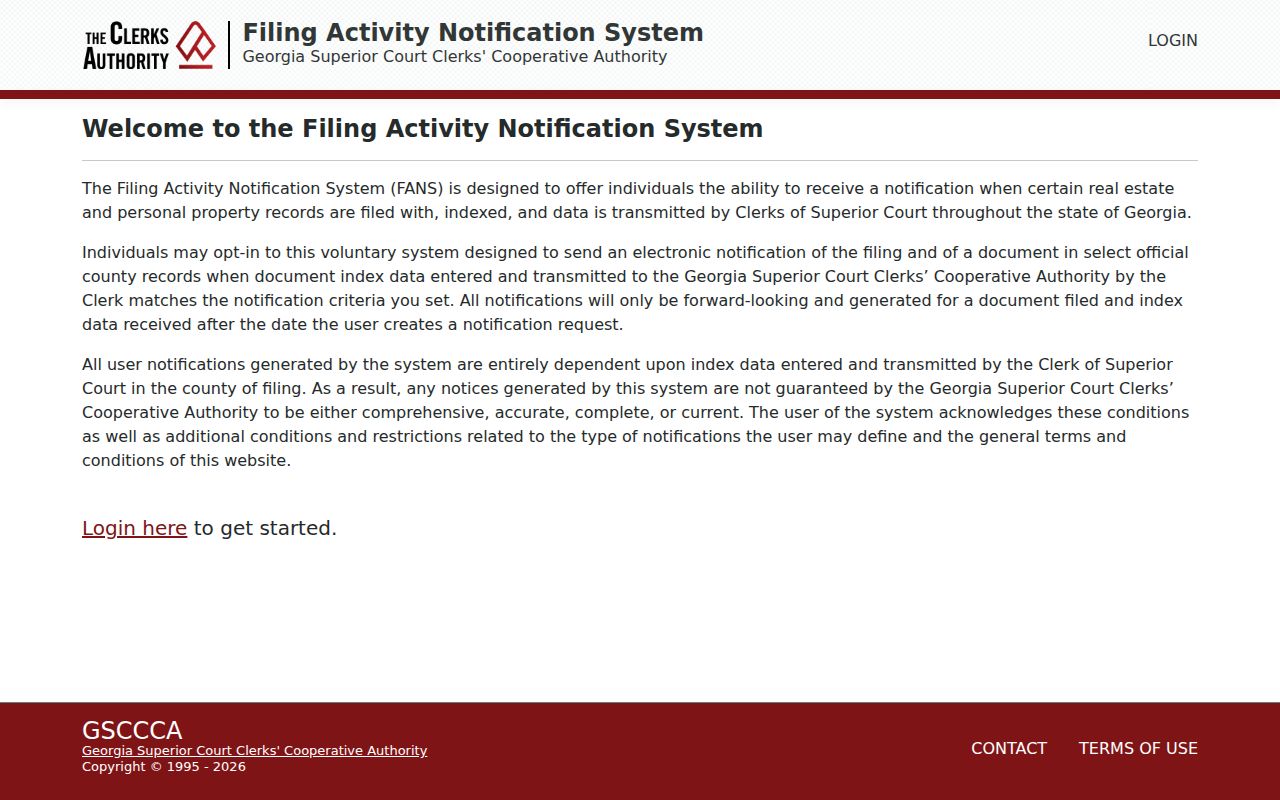
Enrollment adds forward-looking notice to the older backward-walking search habits.
Date Every Link in a Jefferson County Deed Chain
Start a worksheet with what qPublic gives you: owner of record, situs, parcel number, legal description. Add the report date as well. For every possible transfer, add more columns. List the buyer as grantee, the seller as grantor, the deed type, and the instrument date. Also note the recording date. Include the book and page or document number plus the full land description. Note any plat, lien, PT-61, probate, or court cross-reference on the same line. That cross-reference habit is what turns scattered deed records into a chain.
Do not treat the instrument date and the recording date as the same thing. A deed can be signed one week and reach the public index much later. Suppose qPublic names one owner while a newer recorded deed names a different grantee. Keep both dated findings in your notes. Say plainly that the assessor's update interval is not published. The reason matters, because a gap in the property records may reflect timing rather than a missing conveyance.
Run releases and cancellations for every security deed or lien that matters. A lien entry that looks open, with no later release, leaves an incomplete record trail. A signed but unrecorded deed can be absent from the index. It can also be missing from the tax roll. Estate, boundary, and purchase decisions may still need a qualified title professional. That professional can test what the public index cannot show.
Probate Records Can Bridge a Jefferson Deed Transfer
Death can interrupt the simple seller-to-buyer pattern in Jefferson County deed records. The Probate Court handles wills, administration, and year's support proceedings. Those files can authorize or explain a later executor or administrator deed. Pull the probate case number, petition, and letters. Also request the inventory or appraisal, year's-support order, sale authority, and final accounting when they apply.
A will goes straight to Probate Court, as the county directs families to do. No will means an administrator process may be needed first. The deed index still supplies the recorded conveyance itself. The probate file, though, explains the fiduciary's authority. It also explains why the decedent's name, the estate name, and the executor may each appear separately. The grantee may show up in different Jefferson County records too.
Make any request focused. Identify the deceased owner, the approximate date, and the deed reference. Include the parcel or legal description as well. In GSCCCA, search the phrase "Estate of" alongside the fiduciary's own name. Try executor and administrator wording too. Year's-support and court-authorized sale records can affect the chain. That can happen even when an ordinary warranty deed is not the next link.
Jefferson Legal Notices Supply Deed-Book Leads
Old newspapers can open a stalled property search. The Digital Library of Georgia's Georgia Historic Newspapers collection holds Louisville's News and Farmer. Its run spans 1875 through 1967. Sheriff sales, estate sales, and foreclosure notices often name a party or a parcel. Road changes, subdivision announcements, and courthouse notices work the same way. A single name, land description, or date can unlock an index search in the deed records.
A newspaper notice is not a conveyance, so treat it only as a lead. Confirm the event through the Clerk, GSCCCA, a probate file, a tax deed, or a court order. UGA holdings also list film for the News and Farmer and Wadley Herald the Jefferson Reporter. Later holdings cover 1996 through 2014. Call ahead for exact access and reproduction options.